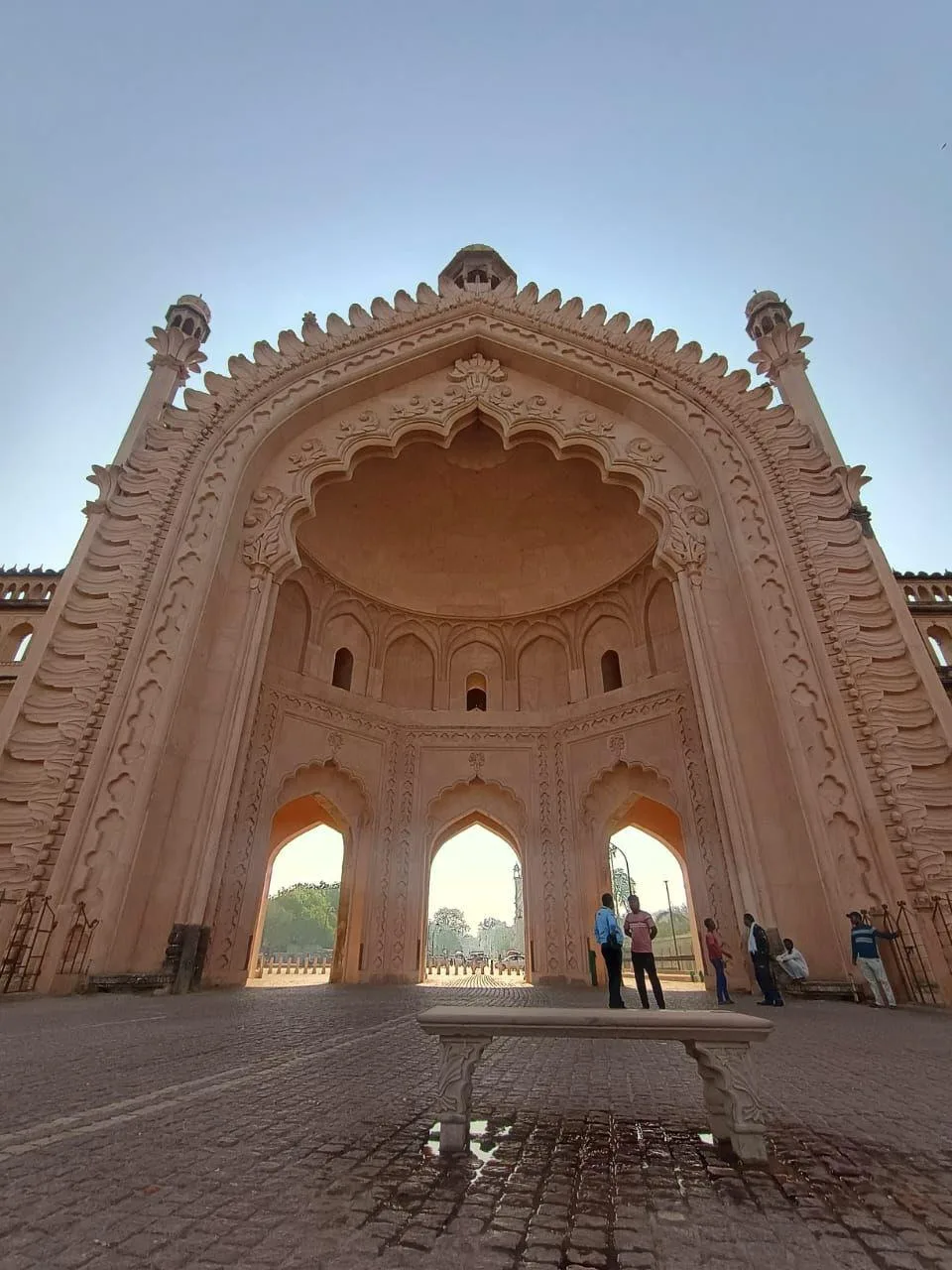
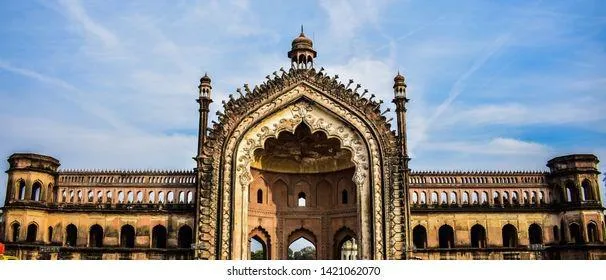
The Rumi Darwaza is not a building in the conventional sense it is an urban threshold. Conceived during the reign of Nawab Asaf-ud-Daula in the late 18th century, the gateway was designed to announce arrival, transition, and authority. Standing nearly sixty feet high, it has come to define the visual identity of Lucknow itself.
Inspired by grand gateways of Central and West Asia, the structure combines scale with delicacy. Its soaring arch, layered profiles, and ornamental stucco work create a sense of monumentality without heaviness. More than an isolated landmark, Rumi Darwaza functions as a connector linking ceremonial space, public movement, and the architectural ensemble of the old city.
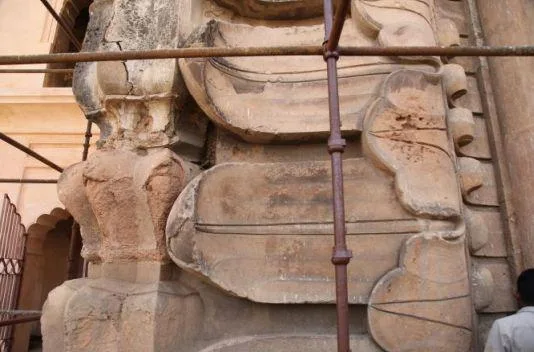
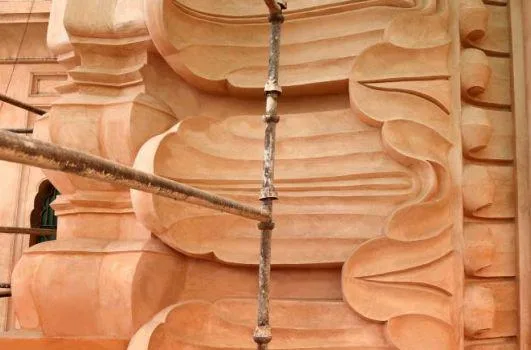
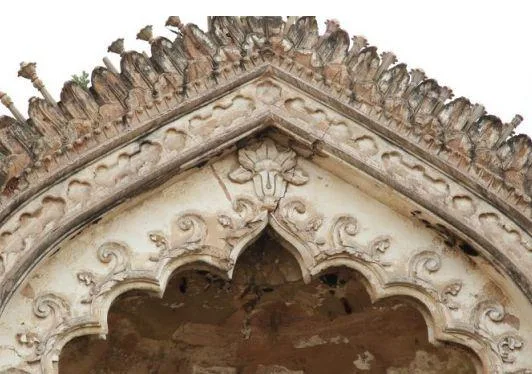
By the time restoration was undertaken, environmental exposure, surface erosion, and material fatigue had begun to compromise both structural clarity and visual sharpness. Weathering had softened profiles, water ingress had affected masonry and plaster layers, and previous interventions required careful reassessment.
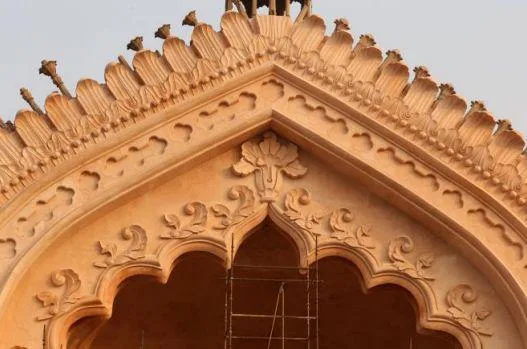
The restoration approach by S.N & Company focused on safeguarding the Darwaza’s role as an urban symbol rather than altering its character. Interventions were executed to stabilise the structure, recover architectural definition, and conserve original material wherever possible. Particular care was taken to preserve scale, profile continuity, and surface articulation ensuring that the gateway continues to read as a singular, commanding form within the cityscape.
Today, Rumi Darwaza stands renewed not as a recreated monument, but as a living threshold retaining its historic presence while remaining fully legible to the contemporary city.