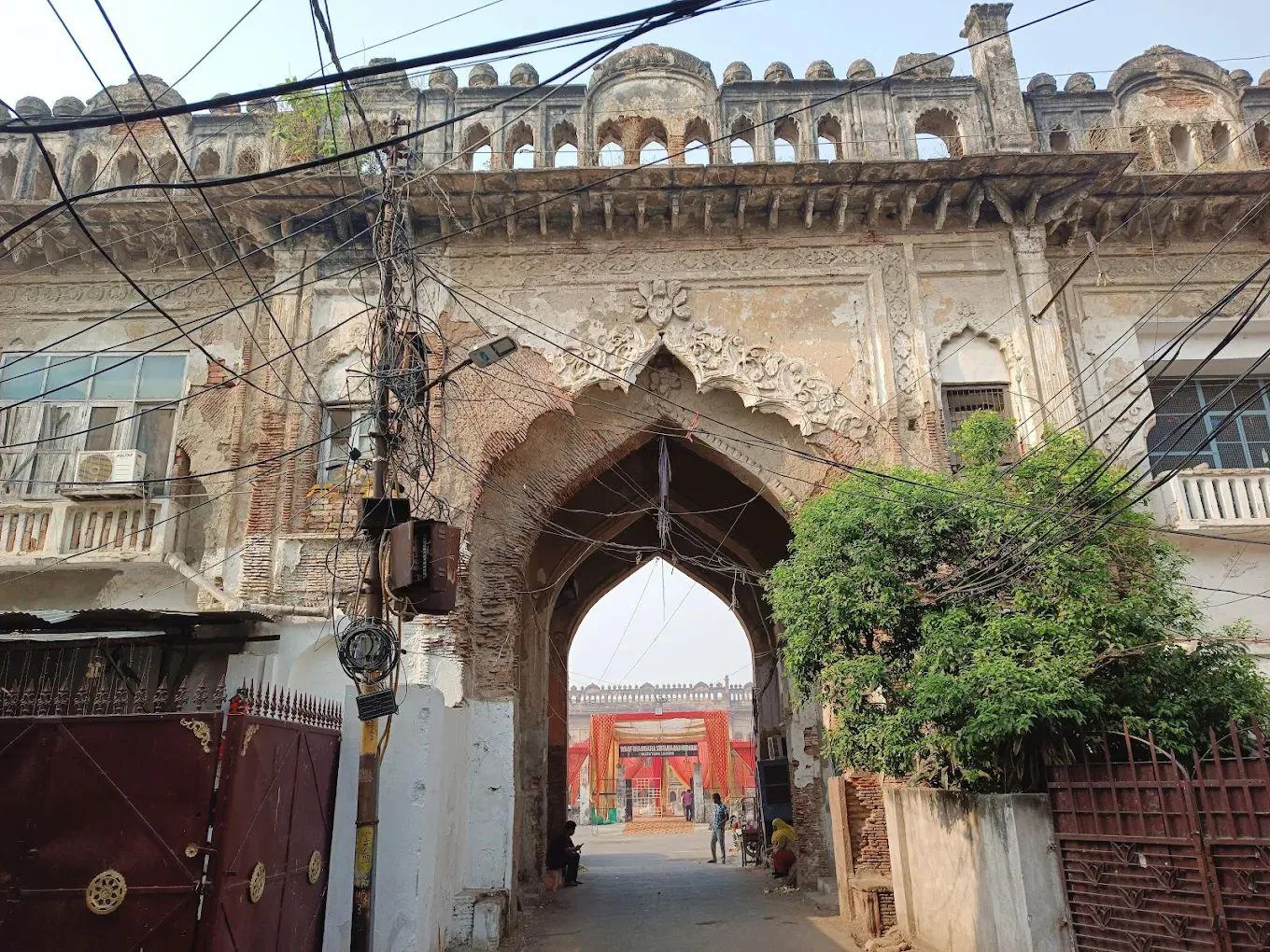
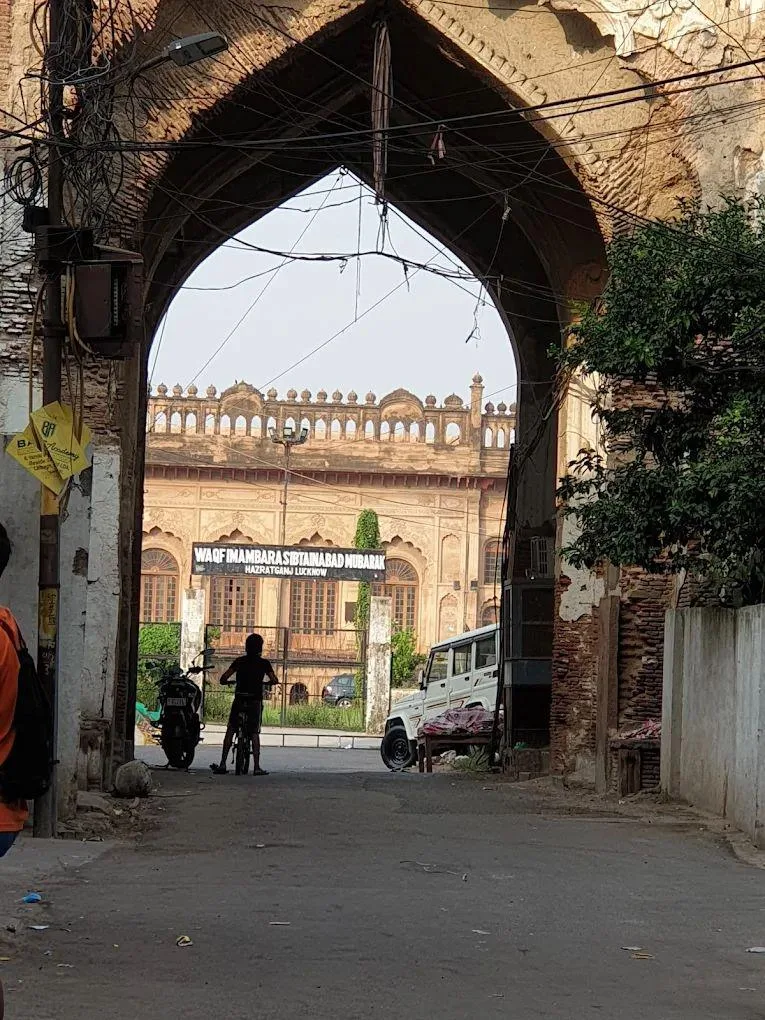
Amjad Ali Gate has long functioned as a working urban gateway rather than a static monument framing movement, commerce, and everyday life within Lucknow’s historic fabric. Unlike ceremonial arches designed to be viewed from a distance, this gate was shaped by constant use, pressure, and proximity to dense urban activity.
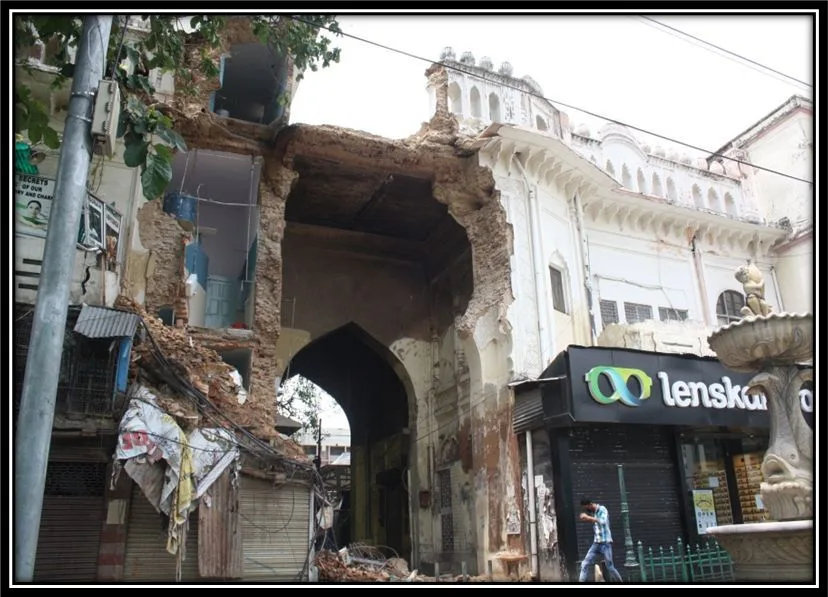
During the COVID period, prolonged neglect, structural fatigue, and lack of timely intervention led to a partial collapse of the gate. The failure was sudden, but not without warning: weakened masonry, compromised arches, and accumulated stress from adjoining structures had pushed the building beyond its threshold. The collapse disrupted circulation, posed safety risks, and exposed the fragility of historic infrastructure embedded within active city life.
Restoration in this case was not an exercise in surface conservation it was an act of structural recovery under constraint. The primary objective was to stabilise what remained, recover load paths, and reconstruct the collapsed portions without erasing the gate’s original character or scale. Detailed documentation of surviving fabric informed the rebuilding process, ensuring continuity in proportion, profile, and material logic.
Interventions prioritised structural integrity first, followed by architectural coherence. Masonry was carefully rebuilt using compatible materials, arches were re-established to restore load transfer, and surface treatments were restrained to avoid visual discontinuity between old and new work. Equal attention was given to the rear elevation, recognising that urban gates must perform on both sides not just the ceremonial face.
Amjad Ali Gate serves as a reminder today that legacy in live cities necessitates upkeep, readiness, and prompt action in addition to adoration. Regaining shape is simply one aspect of its rehabilitation; another is bringing safety, mobility, and continuity back into the urban fabric.