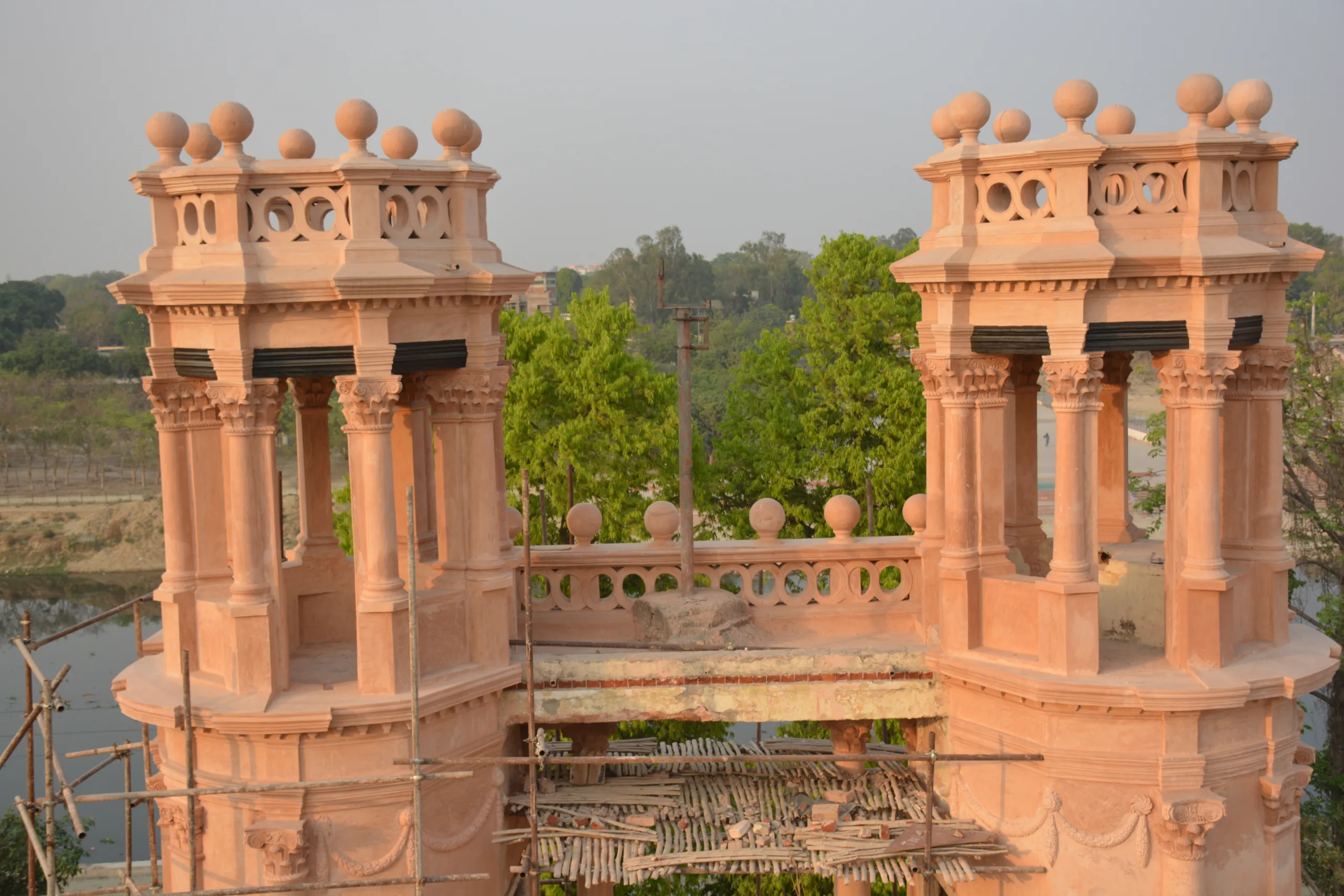
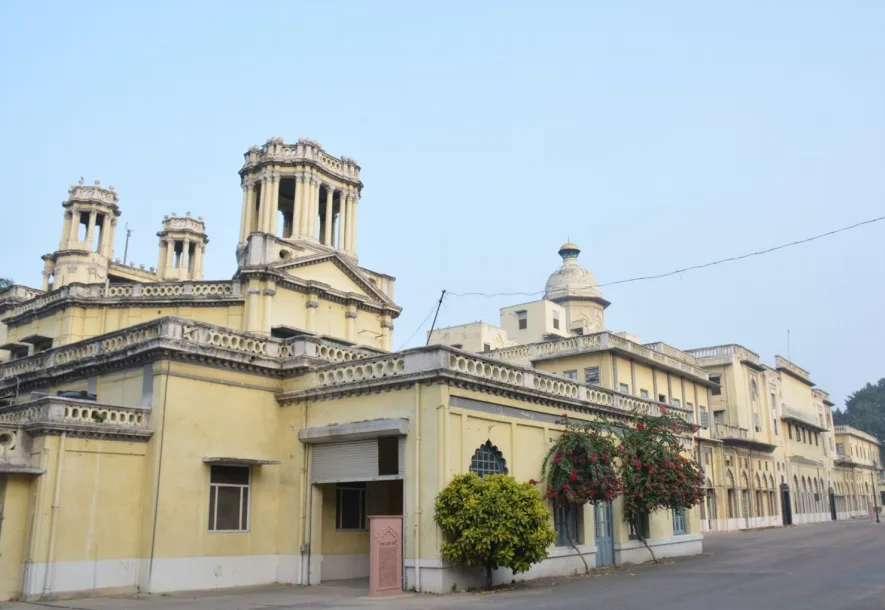
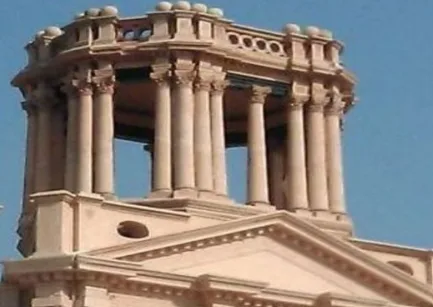
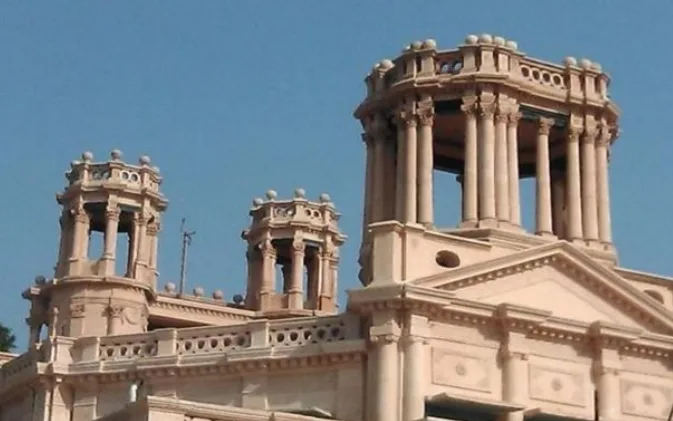
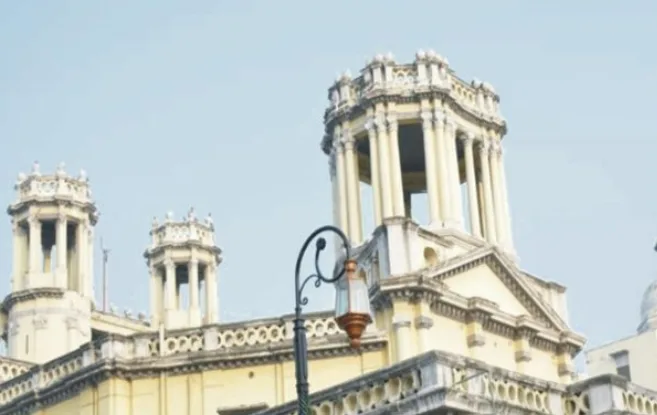
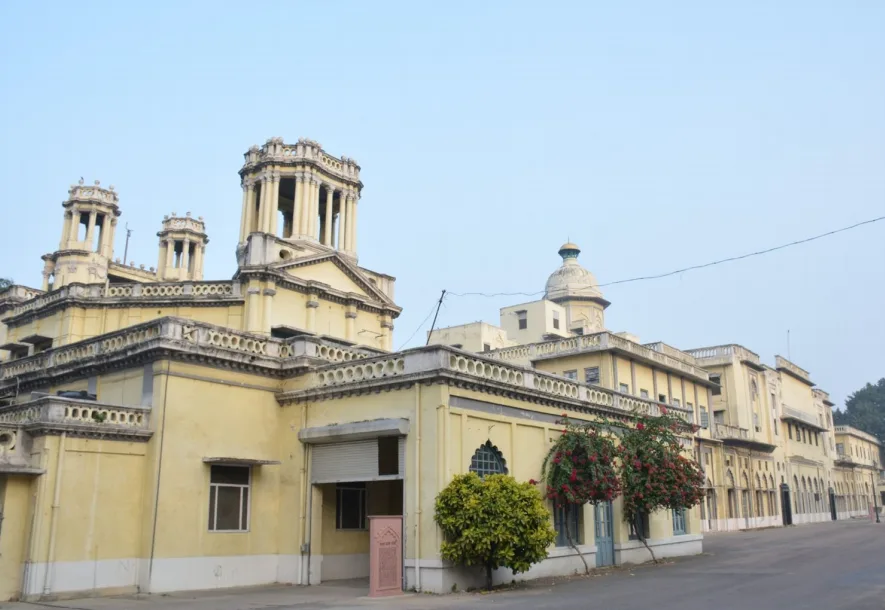
The most striking features of Kothi Farhat Baksh lie in its elevated pavilions and corner towers. These elements were designed not only as visual markers, but as devices of surveillance, ceremony, and climate response offering shade, ventilation, and commanding views across the palace precinct.
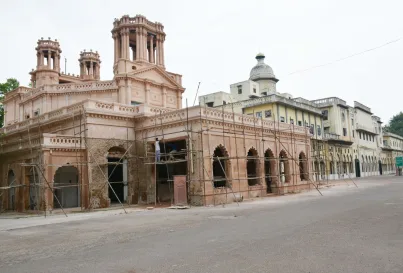
By the time restoration was undertaken, the structure had suffered from surface decay, loss of detail, and material fatigue. Weathering had softened profiles, plaster layers had deteriorated, and previous repairs had disrupted the clarity of architectural elements.
The restoration approach focused on recovering the building’s architectural hierarchy rather than altering its form. Priority was given to conserving original fabric, reinstating proportional clarity, and carefully restoring decorative elements where loss threatened visual continuity. Interventions were restrained, allowing the building’s layered history to remain visible rather than overwritten.
The restoration approach focused on recovering the building’s architectural hierarchy rather than altering its form. Priority was given to conserving original fabric, reinstating proportional clarity, and carefully restoring decorative elements where loss threatened visual continuity. Interventions were restrained, allowing the building’s layered history to remain visible rather than overwritten.