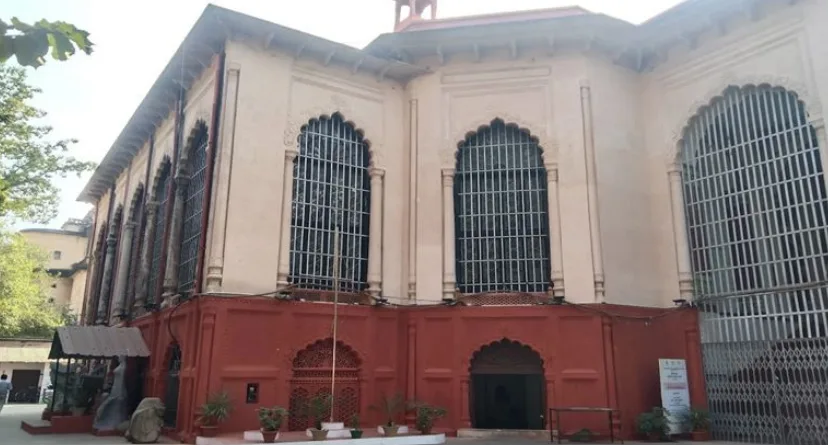
Lal Baradari has historically functioned as a space of assembly rather than enclosure. Conceived as a durbar hall during the Nawabi period, its architecture prioritised openness, rhythm, and accessibility qualities essential for civic gatherings, proclamations, and public interaction.
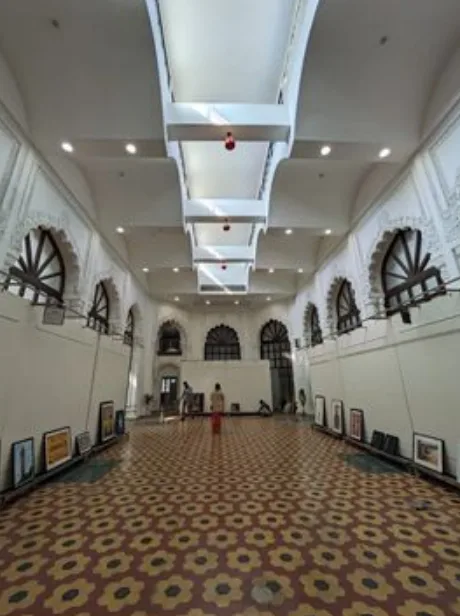
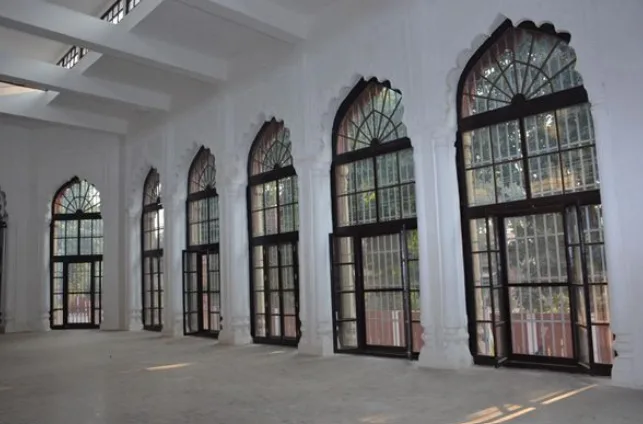
The defining character of the Baradari lies in its generous columned interiors and repeated arches, creating a hall that is visually continuous and spatially flexible. Unlike residential or palace architecture, the emphasis here is not privacy or hierarchy, but collective presence.
Over time, while the exterior retained its recognisable form, the interior required careful intervention to support contemporary public use. The restoration therefore extended beyond surface conservation to include a sensitive interior upgradation, ensuring the space could function safely and effectively without compromising its historic identity.
Interior works focused on:
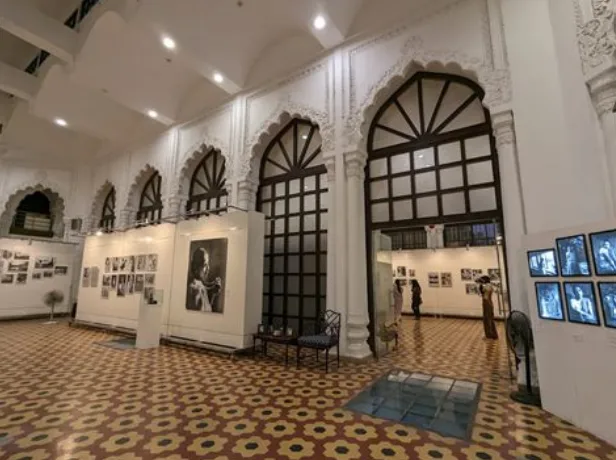
- Restoring and refining the original column–arch rhythm
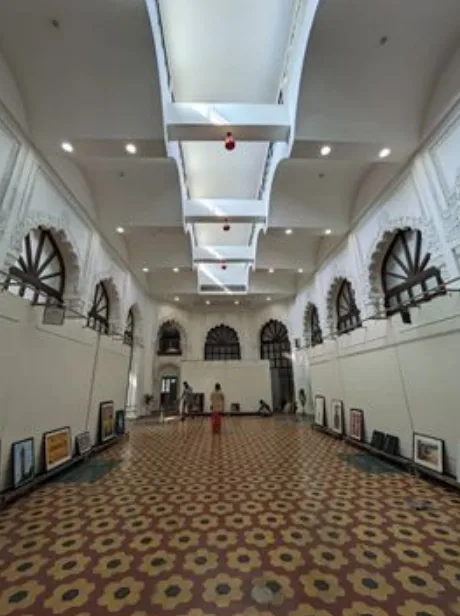
- Upgrading flooring systems while retaining historic patterns and proportions
- Introducing discreet lighting to support exhibitions and public use
- Improving spatial clarity for movement, display, and gathering
- Integrating modern services unobtrusively within the historic fabric
The approach avoided visual clutter or stylistic reinterpretation. Instead, the interior was treated as an extension of the Baradari’s original intent open, adaptable, and dignified.
Externally, conservation efforts addressed material decay and surface deterioration, reinforcing the building’s civic presence while maintaining its restrained architectural language.
Today, Lal Baradari functions not only as a preserved historic structure, but as an active public interior capable of hosting exhibitions, gatherings, and institutional programs. The project demonstrates how heritage spaces designed for public life can be upgraded responsibly, allowing continuity of use without dilution of character.